9/24/26
Individualized Major: Collective Bargaining
Graduation Date: May 1983
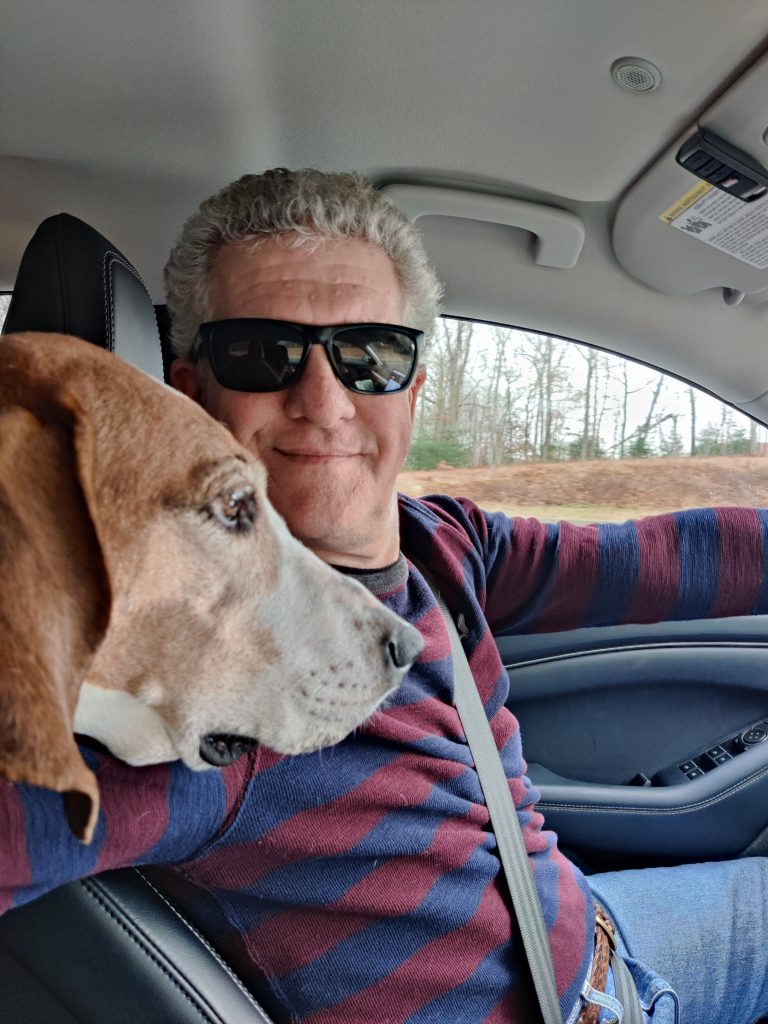
In this episode, Brad Greene explains how he created an individualized major in "Collective Bargaining" by combining courses in Economics, Sociology, History, Business, and more. He describes his long and fruitful career in labor relations and human resource management, all informed by the groundbreaking interdisciplinary curriculum he was able to design as an undergraduate at UConn.
Episode Transcript
Ken Cormier:
This is Indie Major, a show devoted to the wide-ranging stories and visions of individualized majors at the University of Connecticut. I'm your host, Ken Cormier. I'm here with Brad Greene. Hi, Brad.
Brad Greene:
Hello. How are you?
Ken:
Good, very good. Thanks for coming in. So, you were an individualized major at UConn. You graduated in 1983, I believe. It looks like when you applied for the major, you were calling it Industrial and Labor Relations, and by the time you graduated, it was called Collective Bargaining.
Obviously, you came into the program in its relatively early days. Maybe we'll start off with this: What was the concept that you had? How would you describe the major that you ended up creating, and maybe tell us a little bit about how all this transpired?
Brad:
Yeah, the title actually became Collective Bargaining because I couldn't use either Human Resources or Labor Relations. What I was told was that those were classes in the business school, which was separate from the individualized major program. So I had to find something close. Collective Bargaining was kind of the next-best thing.
Essentially, it was about human resources management, with, I would say, at that time in my life, a concentration more on labor relations, union relations, and that type of work. I was also thinking about possibly doing arbitration or mediation. That was a little bit of where I was headed at the time.
It evolved a ton after that, but that was the starting point.
Ken:
Yeah, it looks like you've got a mix of economics courses, sociology courses, history. It looks like there was a department called Management and Organization also, which might have been the business school.
Brad:
That was the business school.
Ken:
All right. So when you decided to put all these courses together, you said you were thinking career-wise, obviously, but what else? What drew you to these concepts of labor relations and this sort of thing?
Brad:
It was interesting. When I actually started school, I started somewhere else. I went to a different university on a science scholarship—completely different area of study. I was getting disenchanted with the science part of it at that point.
I started taking other courses—psychology, sociology, some business courses, kind of what you do as a freshman—and I was getting very attracted to those and how they were coming together.
I actually had a couple of people in my life at about the same time who didn't know each other. It was my dad and the older sister of one of my best friends. They both recommended, based on my skill set and interests, that I ought to think about labor relations or human resources.
I started to explore it, and it was really fitting in with the interests of those courses that I was starting to take. I said, "This is the route that I want to go. It fits with me." And that's kind of where the path started.
Ken:
Wow. What was the branch of science?
Brad:
It was probably mostly biology at that time.
Ken:
Pre-med?
Brad:
Kind of. I mean, biology was easier to spell than "undecided" at that point. But I loved the natural sciences as a kid, as a high school student. It was just different at the university level, with 600 kids in a chemistry class. I wasn't as excited about it as I became with some of the other things that I was looking at.
Ken:
Okay, so you said you started at a different place. You ended up at UConn. How did you discover that you could put together your own plan of study?
Brad:
Yeah. As I was thinking about transferring, I was exploring a number of different things, and I was really looking for a way to further my interest in the human resources and labor relations area.
When it was catalogs and not online, I picked up the UConn catalog and started to go through it. I saw some of these courses, but I didn't see the major. Then I stumbled upon, later in the catalog, the individualized major program.
I said, "Oh, this looks like this will all fit."
I was also, at that time, paying for school myself, so I needed something more affordable. I'm from Connecticut, so this really worked. But I came here for the individualized major program because the coursework was there and I could put it together in this type of program. That's why I wound up deciding on UConn.
Ken:
So you saw it in the catalog as you were considering coming to UConn as a possible major?
Brad:
I came for it. It's not like I came here and then discovered it. It was very much: I saw it, this is a possibility, the coursework was there. So I transferred with the intention. Fortunately, the committee said yes.
Ken:
So it looks like your faculty advisor was Art Goldsmith from economics. Do you remember Dr. Goldsmith?
Brad:
Oh, very much.
Ken:
So he was the one you worked with mainly when you had these ideas?
Brad:
Absolutely.
Ken:
And how did that go down when you approached him?
Brad:
He's great. He had a particular interest in some of these labor topics and labor economics, and he was fantastic at connecting me with others.
I had seen the course titles in the book, but he absolutely was great at connecting me with other people and was really, really passionate about labor economics. He was able to connect me with others.
Ken:
Yeah. Now, do you remember, was there something that stood out to you—some kind of learning that you did or a project that you did while you were here—that was a really crystallizing moment for you?
Brad:
There were a couple of things. For me, all the content was new. I'd not been exposed to any of this. I particularly gravitated toward some of the labor law and labor relations aspects of it. That was important.
I think what it did was really confirm that, yeah, this is something I could be very passionate about and would want to do.
I do think the big thing, though, was the internship I did up at the Connecticut State Department of Labor Relations. I was able to spend a summer up there, and what it did was take this new content I was getting in the classroom and really create a practical application.
I was out in the field with the agents. We were investigating unfair labor practice charges that were happening at the state level. There was research involved. There was the application of law. There was the ability to draft responses. There was all of it.
I said, "Man, this fits so many parts of me." I love the investigative thing. I love the problem-solving thing. I like the relational aspect of it, of working with people in the field.
It really took what was conceptual in the classroom and gave it practical application. It just kind of put the exclamation point on it.
Ken:
Now, to this day, the program is 50-plus years old here at UConn—the individualized major program. When people approach us, sometimes they'll ask, "Will I be able to have the same opportunities that a traditional major would have?" Whether it's applying to grad school or going into some sort of profession, there's a little bit of concern: Will people even understand what it is that I did by creating my own interdisciplinary major?
Do you remember what it was like to apply to graduate school having created your own major versus coming in with, like, a straight economics major or something like that?
Brad:
To me, it wound up being a game changer because so many people applied for those programs and they don't have that experience. They're coming out of maybe an undergraduate business degree or a history degree or some other type of degree and going into that program.
One of the advantages I had is that I not only had some experience in the coursework when applying for grad school, but I also had that added thing that I had designed the major myself.
So it wasn't just that that happened to be my undergraduate major. It was that I had demonstrated a commitment: This is a field I want to enter.
And I think that made a lot of difference in the acceptance to a very, very competitive grad school program. I credit this for that all the time because this certainly helped a bunch.
Ken:
Yeah, that's great. So it did become a talking point.
Brad:
It really did.
Ken:
And I guess it takes maybe a certain kind of student to actually get up and take charge of that when they see that gap as well.
Brad:
Yeah, I think that's true. It takes a little more work. If you say, "How do I go and find all of the puzzle pieces across a large university system and put them together in something that fits, and then take the effort to go to somebody and have it make sense and pull together some different departments?" Yeah, there's a little more effort.
It's easier to just declare an established major, but that's, to me, the beauty of this: that opportunity is there.
Ken:
Right. Now, have you ever run across anybody—other colleagues in your career—who did anything similar to this?
Brad:
Frankly, a lot of people in HR, I think, would come from one of two backgrounds.
They either got in, I'll say, through the ground up. They might have become a recruiter, and somebody in their company said, "Hey, why don't you go over and do the HR work?" Something like that. So they didn't do it through an educational route.
Or they had a major like economics or something like that, and they applied to one of the grad schools. They didn't have the undergraduate foundation.
For me, just having the undergraduate foundation to lead into grad school was a real difference maker.
Ken:
Yeah. Now, I'm trying to think historically here again. When Ronald Reagan challenged the airline air traffic controllers—
Brad:
Right around that time.
Ken:
When you were at UConn?
Brad:
It was hot. And what we've seen over the last 40 to 50 years is really the percentage, certainly, of private-sector unionization just decreasing significantly.
It was certainly a bigger deal then, and I think that's why my interest was more there in the labor relations, union relations aspect of things. It was a bigger part of the workforce.
As I evolved in my career, as the workplace evolved, it became less for me about union relations and labor relations and more of a broader human resources management career and organizational development career.
But that was a hot topic when I first started.
Ken:
For sure, for sure. I had mentioned to you before we started this conversation, we have an industrial and labor relations major currently who's going to be graduating soon in the individualized major program.
It occurs to me that students now who gravitate toward this topic might be thinking that they see a gap in the way that labor unions operate, or used to operate, or are changing and morphing over time.
I mean, that was going to be my last question: How have you seen this change over time in your career?
Brad:
I think the whole nature of work is changing. And I could see future individualized majors that have an interest in the workplace, labor, or human resources having a very large technology component to their program.
How is technology now going to start shaping the work and people's relationship to work and people's relationship to technology? That's really where the frontier has gone in organizations.
We kind of went through a thing coming out of the '80s, I think, very much lean organizations doing more with less. How do you do that?
The next frontier is going to be people's relationship to work and technology and all of it. That's probably a great individualized major topic for somebody down the road.
Ken:
Yeah. We have our first AI-focused major, actually, that just started last year. They created a major, and it does have a sort of business focus to it as well.
So you must have been talking about things like AI-proofing or, you know, technology in the workplace before you retired. That was becoming the topic, I guess.
Brad:
Yeah, it was. It was.
Ken:
And luckily now you don't have to.
Brad:
I was going to say, I've kind of missed most of that, which is fine.
Ken:
Do you feel lucky that you're missing it?
Brad:
I was going to say, that's fine. I've gone through enough evolution.
Ken:
Very good. Well, thank you so much for coming to campus. It's great to actually sit with you here in the studio, which is really exciting. And just talking about your experience with the individualized major program, it's been such a pleasure.
Brad:
Hey, I will say one other thing, Ken. You asked me the question about how my life has changed. When I kind of started with, "I came here for the individualized major program," I met my wife of 43 years here.
So if there weren't an individualized major program, I may not have met her, too. That's the other thing.
But thank you very much for the opportunity. I really have enjoyed the conversation. You know, the program has just a great, great place in my heart and in my evolution. So I'm grateful for it.
Ken:
Yeah, pleasure is mine. Thanks so much.
Brad:
Thank you.
Ken:
Thanks for listening to Indie Major. If you'd like more information about individualized and interdisciplinary studies at the University of Connecticut, please visit our website at iisp.uconn.edu. That's iisp.uconn.edu.
We'd also like to thank UConn Enrichment Programs and WHUS UConn Radio for their support of this show.
Back to Indie Major