9/8/26
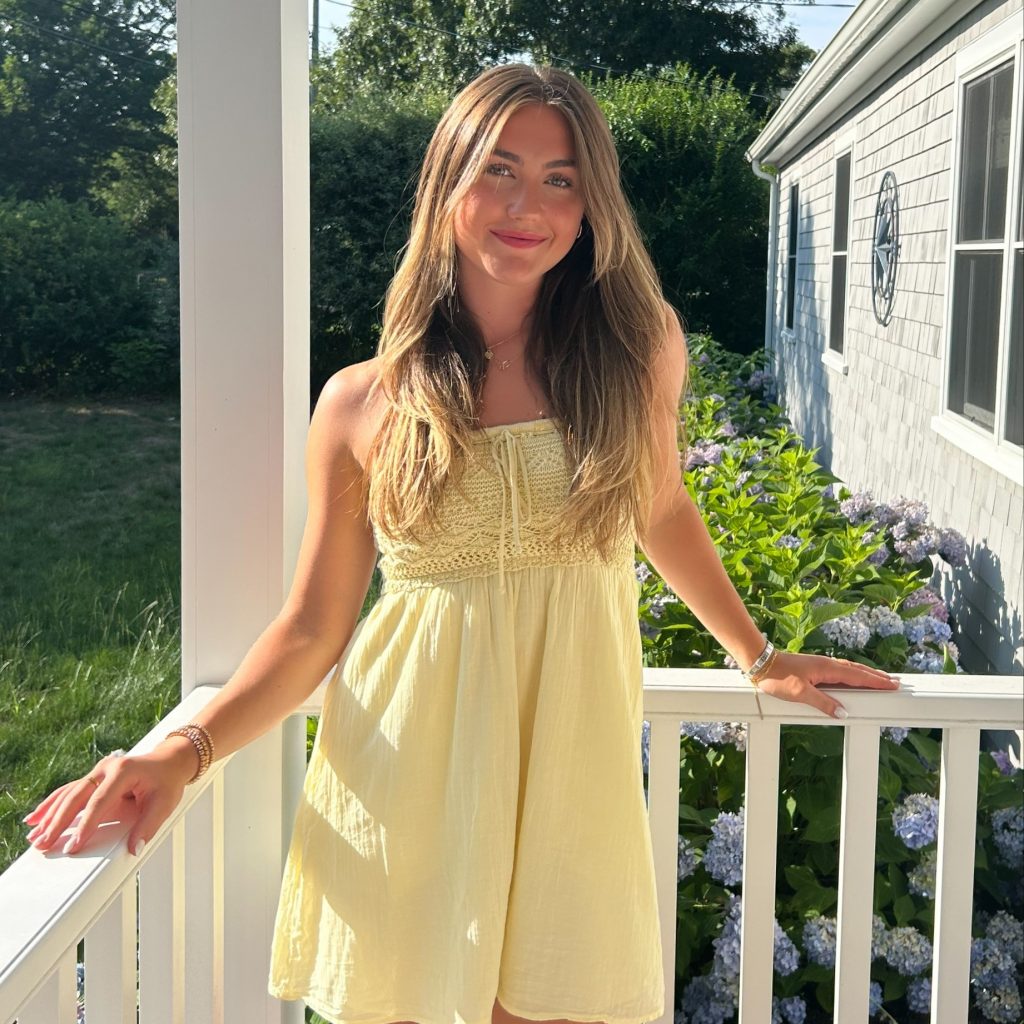
Individualized Major: Global Health and Youth Development
Graduation Date: May 2028
In this episode, Kathleen Whisler explains how she created an individualized major in "Global Health and Youth Development" by combining courses in Allied Health, Human Development & Family Sciences, Anthropology, Physiology & Neurobiology, Molecular & Cell Biology, and more. She describes her lifelong passion for science, medicine, and working in the area of children's health.
Episode Transcript
KEN CORMIER:
This is Indie Major, a show devoted to the wide-ranging stories and visions of individualized majors at the University of Connecticut. I'm your host, Ken Cormier. I'm here with Kathleen Whisler. Hi, Kathleen.
KATHLEEN WHISLER:
Hi, everyone.
KEN:
Thank you so much for being here. You are an individualized major here at UConn, and the major that you created is called Global Health and Youth Development. Do you want to tell us a little bit about what that major is all about?
KATHLEEN:
Yeah, of course. Thank you so much for having me. To start off, Global Health and Youth Development is essentially an interdisciplinary major made up of about five different disciplines.
Starting off, I have courses in anthropology. I'm currently taking a course called Global Health, and next semester I'll be taking the second version of that, Global Health and Human Rights.
I also have courses that are more science-focused—courses in Molecular and Cell Biology, such as Human Genetics and Microbiology. I have anatomy courses as well, so I have Anatomy I and Anatomy II in my plan of study.
Then, for the Human Development and Family Sciences and youth development aspect, I have courses that focus on youth development, ranging from infant to adolescent development. I'm also currently involved in research in HDFS.
KEN:
All right, so HDFS is Human Development and Family Sciences.
KATHLEEN:
Yes, that's correct.
KEN:
The department here at UConn. So it sounds like you have a lot going on. You've got health sciences, it sounds like, and then you've got this whole global element that you've worked in. But there's also this specific focus on youth and child health.
KATHLEEN:
That's correct.
KEN:
Interesting. So you were able to put all that together with this array of courses, which is so cool. Where is all this headed? What do you imagine doing with all of this?
KATHLEEN:
So I'm currently planning on pursuing medical school. Eventually, I want to work with a pediatric population, ideally in some sort of public health realm. Whether that's infectious diseases or simply working with a pediatric population and then advocating for global health policies, I want to help give people around the world opportunities to receive health care. That's kind of my focus right now.
I really like how global health includes both my ability to work directly, one-on-one, with patients, but also to work at more of a policy level, where I can advocate for nationwide change, especially here in the U.S. and across the world as a whole.
KEN:
Wow. Okay. So it sounds like you're pre-med, then?
KATHLEEN:
That's correct.
KEN:
You plan on going to medical school. You're also mentioning public health. Do you plan on doing graduate work in public health?
KATHLEEN:
That's definitely an option for now. There are a lot of programs in medical school where you can earn a master's in public health while also getting your MD or DO. That's definitely something I'm interested in. I'm still a little bit early in the process to make that decision, but I would totally be interested in doing some sort of master's in public health.
KEN:
Yeah. Do you also think about working internationally or working outside of the U.S.?
KATHLEEN:
Yeah, I've definitely looked into working outside of the U.S., and there are a lot of programs and humanitarian organizations that allow you to do that, like the World Health Organization. I would love to do some sort of internship there.
I'm likely going to be taking a gap year between undergrad and med school, so I would definitely look at a year-long program where I can volunteer throughout different nations and help give people opportunities to receive health care.
KEN:
Listening to you talk, it makes me wonder: How long have you been thinking about stuff like this? Have you always pictured yourself as being a doctor someday, or when did all this start?
KATHLEEN:
I would say, foundationally, I've always been interested in science and helping people. I think that started when I was younger, growing up with such amazing parents and family members who really pushed me to be both curious and empathetic. I think those two things have come together and forged my path toward medicine.
My mom is a fifth-grade math teacher, and just seeing her work with young students has really inspired me to work with youth populations. I've worked as a substitute teacher at her school for the past two years, and I think that's really where my love for working with pediatric populations has grown exponentially.
I see how innocent these children are, how curious they are by nature, and how they have such a positive outlook on life. I connect with that deeply. So I'm really looking forward to working with children and kind of bringing a new light to them.
On the other side, my aunt is a nurse. She's an emergency room nurse and has been for years. She's been a huge part of my childhood and growing up, and I've always had her by my side. I think she's instilled this sense of empathy in my life—always giving to others and always working with others.
I think those two influences combined have pushed me toward working in medicine. So, foundationally, yes, it's always been with me. Has it always been, "Oh, I want to be a doctor"? No.
I actually came to UConn pursuing animal science. I was on the pre-vet track. That changed, and that's perfectly okay. That's where the individualized major came in. I think it gave me a place and a sense of belonging because I felt like I could include so many different things and disciplines that I was interested in, like anthropology and social science, as well as the more hard-level sciences, where we have chemistry and biology.
I think that brought my sense of curiosity—where I always want to learn—and my empathy together. It kind of forged them into something where I can now pursue medicine in a way that I feel like I'm changing more than just the patient's diagnosis. I have the capacity to impact the patient on a scale that's not just medically focused; it's also socially focused.
KEN:
And what about the global element of things? Have you traveled a lot?
KATHLEEN:
The global element has been more of a recent development, I would say, since coming to college.
I've always known I want to work with a diverse array of people. I've also always known that I wanted to work in some sort of health care or science field because, whether it was pre-vet or pre-med, it's always been health care, right?
I know that I'm going to be working with a diverse array of patients, whether they're my actual patients or the owners of the pets that I would have been working with. It's going to be a diverse array of people.
I really liked that global health allowed me to explore the social determinants of health that affect these individuals. That's something I learned about in my first HDFS class, which was Aging Across the Lifespan.
We talked a lot about different types of development—not just biological development, but also how social groups, whether at the macro level or the micro level, influence an individual's development throughout the lifespan.
With that, we talked a lot about access to care, especially when it comes to mental health. That kind of pushed me in the direction of thinking, "Oh, I want to know and learn more about how individuals are affected by large-scale things that are going on in the world."
Even with environmental health, natural disasters, and all the things that are happening in the world, there are just so many factors that aren't focused solely on the United States. I wanted to be able to understand that.
That's where I decided to look into global health, and I'm so glad I did because I think it will push me to be even more empathetic than I already am.
KEN:
Now, does this mean that you'll be doing any study abroad programs, or have you already?
KATHLEEN:
I haven't yet, but I am planning on studying abroad next spring, so that's about a year from now.
I've been looking into the Florence program, and they have a lot of different courses, especially within youth development. I think that's super interesting because I can take those courses and compare them to the ones I've learned here in America and see the differences.
They also have, I believe, an infectious disease course that I'm interested in taking because infectious diseases play such a large-scale role in the world. We certainly saw that with COVID.
So I'm excited to study abroad and explore health not in the United States, but in a different location.
KEN:
That's amazing. So it sounds like it's all very well organized. You're going to finish up your undergraduate career by studying abroad and getting some of this excellent learning there.
Okay, so I have to ask: What was it that got you interested in potentially being a vet? Where did that come from?
KATHLEEN:
So, kind of like I said already, I was interested in science and health care. During my senior year of high school, I thought, "I've always loved animals." So I became a vet assistant over that summer.
That whole year, I worked as an intern at MSPCA, which is the Massachusetts Society for the Prevention of Cruelty to Animals. It's a nonprofit animal shelter.
I just fell in love with working at a place that had so much meaning and carried so much weight for all of these animals that didn't have access to the help they needed.
I think that's what I really fell in love with—helping populations that don't have access to care.
In my role as a vet assistant, I worked in a vaccine clinic for low-income populations. It was super fast-paced, and I really loved the work I did there.
But I think from that moment on, I was kind of leaning toward working with people. I really loved interacting with people that I could talk to and with whom I felt like I could develop a relationship. Not that you can't have that with animals, but it's just a different type of relationship.
From there, I decided to shadow in a few different medical positions. I shadowed nurses, and I'm planning on shadowing more doctors this summer. I just knew that it was the right spot for me.
Also, going from vet medicine to becoming a doctor or nurse—something where I'm working with the human population—it wasn't as stark a difference as you might think.
You might think, "Oh, you're going from working with animals to working with people. That's such a huge difference." But it still requires the same basic, foundational competencies: empathy, curiosity, wanting to help others.
Whether that was animals or humans, I've always known I wanted to help others. So I think that played a really big role. It was just a matter of figuring out that it wasn't animals I wanted to help—it was people.
KEN:
Yeah, of course. I mean, the whole idea of doing good and helping—you can definitely see that extending to whether it's the animal population or the human population.
Also, you're in the Honors Program here at UConn, which, in the individualized major, means that you do basically a year-long thesis project. Have you begun working on that, or what are your ideas so far around that thesis project?
KATHLEEN:
Yeah. So this semester, I'm doing three credits of undergraduate research with Dr. Gans, who's a professor in the HDFS department. It's truly been so great. She's such an amazing mentor, and I meet with her once a week.
The project we're working on right now focuses on creating intervention programs for children ages two to five in the Hispanic population to prevent childhood obesity.
I've really loved working in this role because I can take both a health care standpoint and a more global health approach. A lot of these families come from immigrant populations, so they have cultural values that impact the food choices they're making. That's something I've seen in the research.
What I'm doing in this research position is called qualitative coding. I go through these focus-group transcripts, and we look at participants' answers based on barriers and facilitators to a child's eating habits, physical activity, and screen time.
Based on that, we create ideas for intervention programs to help limit the risk of childhood obesity in these populations.
Continuing on next semester, I'll be working on my thesis. I'll be writing and synthesizing all of these results from the focus-group data that I've been qualitatively coding so far. Then I'll create an intervention program and hopefully get this research published, which is really exciting.
KEN:
Yeah, that's amazing. So you're doing that here in Connecticut?
KATHLEEN:
Yes.
KEN:
Any specific place?
KATHLEEN:
The research has already been conducted, and I just have the data now. The research was conducted in areas around Providence, Rhode Island.
KEN:
Okay. Now, a lot of times when students, especially when they come to this moment where they decide to create their own major, there's some kind of "aha" moment, whether it's before they create it or while they're actually doing it.
You already talked about encountering this concept of social determinants of health, which is pretty profound. Were there any other moments that you had—or even a book that you read, a course you took, or something that you did—where you felt like, "Wow, this is really changing my perspective or inspiring me"?
KATHLEEN:
So I think it really came down to my interest in learning in all fields, whether that be science or social science, like anthropology.
I love to learn. That's one of my big things. I've always grown up curious. I love learning, and it's always been science, but it's also always been English and how the arts can impact an individual's experience.
I loved the intersection of both, and I still remember the day I found out about the individualized major.
I was in my mom's classroom, and I was kind of like—I didn't know exactly what I wanted to do. At that point, I knew I wanted to switch out of animal science and pursue something in health care. But nothing felt right.
Biology didn't feel right. PNB—which is Physiology and Neurobiology—didn't feel right. Those majors didn't encompass what I wanted to learn and what I wanted to do.
Neither did focusing solely on something like Human Development and Family Sciences. I really loved the intersection between the sciences and the social sciences that I could bring together.
I could understand social determinants of health through both a scientific view and also a more social view. I really, really loved that.
After finding out about the individualized major, I started researching the classes we had at UConn, and it kind of all fell into place for Global Health.
KEN:
Well, that is so amazing. Thank you so much for coming in. It just sounds like you're getting so much done and doing so much valuable work.
I do think probably now more than ever, we need visionaries like you getting involved in health and global health.
Thanks so much for coming in. It was a pleasure to speak with you.
KATHLEEN:
Yeah, thank you so much for having me. I appreciate it.
KEN:
Thanks for listening to Indie Major. If you'd like more information about individualized and interdisciplinary studies at the University of Connecticut, please visit our website at iisp.uconn.edu. That's iisp.uconn.edu.
We'd also like to thank UConn Enrichment Programs and WHUS UConn Radio for their support of this show.
Back to Indie Major